Global Radiotherapy Market Set to Surge, Reaching $9.62 Billion by 2030

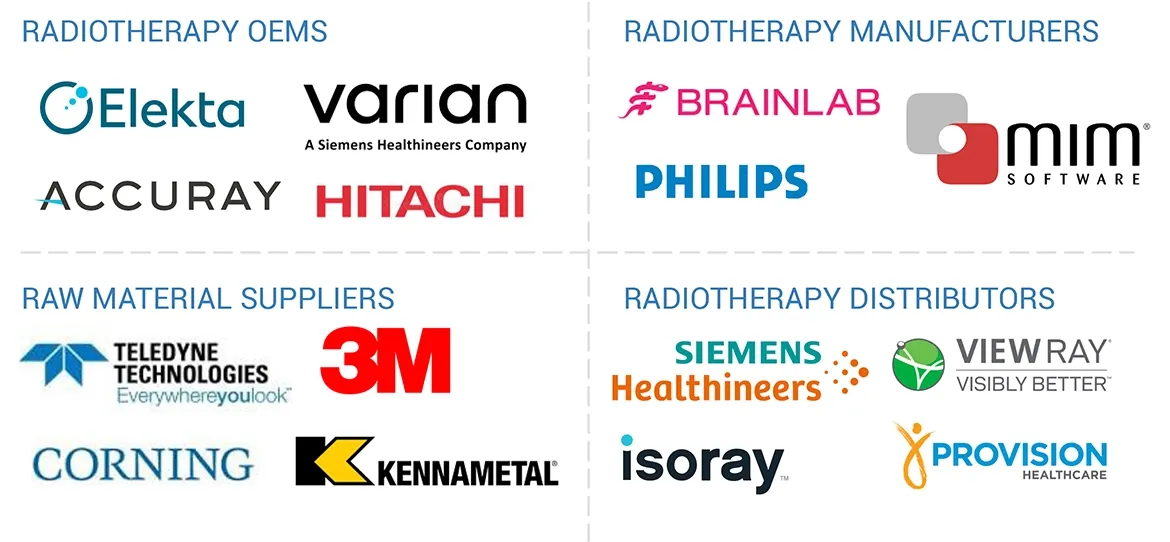
The global radiotherapy market is entering a phase of significant expansion, driven by a surge in cancer cases and rapid technological innovation. According to a new report from MarketsandMarkets, the industry—valued at $7.21 billion in 2024—is projected to grow at a steady annual rate of 4.9%, hitting an estimated $9.62 billion by 2030.
Download PDF Brochure:https://www.marketsandmarkets.com/requestsampleNew.asp?id=567
Technological Advancements Leading the Charge
The primary engine behind this growth is the increasing adoption of External Beam Radiotherapy (EBRT), particularly high-precision methods like Particle Therapy. Industry experts note that proton beam therapy is becoming a preferred alternative for many, as it minimizes damage to healthy surrounding tissues and reduces the risk of secondary tumors.
Recent industry milestones highlight this shift:
- Elekta recently launched "Evo," an AI-powered CT-Linac designed for adaptive radiation therapy.
- Accuray Incorporated received critical NMPA approval for its CyberKnife S7 and Radixact SynC systems, expanding access to minimally invasive treatments.
- IBA Worldwide entered a partnership with the Asian Institute of Gastroenterology to deploy compact therapy systems for advanced oncology research.
Regional Growth and Market Dynamics
While North America remains the largest market due to favorable reimbursement policies and a high concentration of key players likeSiemens HealthineersandViewRay Technologies, the Asia Pacific region is expected to witness the highest growth rate. Emerging economies, specifically China and India, are seeing increased partnerships between hospitals and medical tech firms to improve treatment accessibility.
Hospitals currently dominate the end-user segment, as they increasingly invest in multidisciplinary approaches that integrate radiotherapy with immunotherapy and surgery.
Overcoming Industry Hurdles
Despite the optimistic forecast, the market faces notable challenges. The complexity of operations—requiring highly skilled physicists and oncologists—remains a barrier to widespread adoption. Furthermore, the high cost of advanced systems like LINACs and the inherent risks of radiation exposure to healthy tissue continue to be significant points of concern for providers.
However, a shift toward value-based payment models in the United States, such as the CMS Radiation Oncology (RO) model, is expected to encourage investment. By bundling payments for 90-day episodes of care, these models aim to make high-quality cancer treatment more cost-effective and accessible.
Key Players to Watch
The competitive landscape is currently led by global giants including:
- Siemens Healthineers(Germany)
- Elekta(Sweden)
- Accuray Incorporated(US)
- IBA Worldwide(Belgium)
- Koninklijke Philips N.V.(Netherlands)
As the patient population ages and lifestyle factors contribute to rising cancer rates, the demand for these life-saving technologies is only expected to accelerate.
Download PDF Brochure:https://www.marketsandmarkets.com/requestsampleNew.asp?id=567