Brazil Laboratory Information Management System (LIMS) Market: Driving Digital Transformation in South America’s Scientific Hub

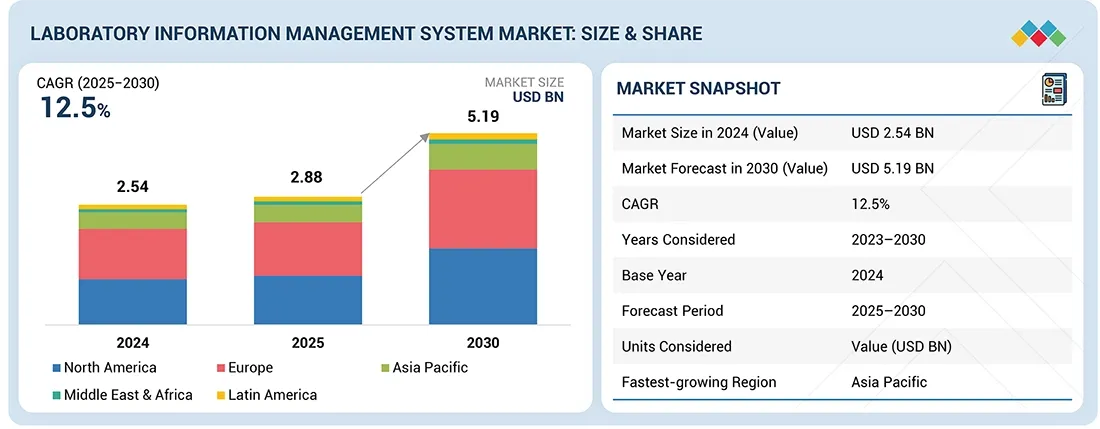
The scientific landscape in Brazil is undergoing a profound shift as laboratories across the country transition from manual, paper-based record-keeping to sophisticated, automated digital ecosystems. At the heart of this evolution is the Laboratory Information Management System (LIMS). According to recent industry analysis by MarketsandMarkets, the global LIMS market is projected to reach USD 5.19 billion by 2030, with the Asia Pacific and Latin America regions, particularly Brazil, identified as high-growth territories. This growth is fueled by a combination of increasing R&D investments, a booming pharmaceutical sector, and the urgent need for stringent regulatory compliance in a globalized economy.
Download PDF Brochure:https://www.marketsandmarkets.com/pdfdownloadNew.asp?id=250610373
The Economic Engine: Brazil’s Growing Lab Infrastructure
Brazil has established itself as a regional powerhouse for life sciences and industrial manufacturing. As the country modernizes its healthcare facilities and expands its footprint in the global export market for food, agriculture, and petrochemicals, the demand for data integrity has never been higher.
The Brazil LIMS market is currently benefiting from a surge in laboratory investments. Large enterprises and government-funded research institutes are leading the charge, utilizing LIMS to manage the massive volumes of data generated by clinical trials, environmental testing, and quality control processes. By automating sample tracking and workflow scheduling, Brazilian labs are reducing human error and significantly improving operational throughput.
Market Segmentation and Technological Adoption
The adoption of LIMS in Brazil can be categorized by several key segments, each reflecting the specific needs of the local industry:
1. Deployment Models: The Shift to the Cloud
While on-premise LIMS traditionally held the largest share of the market due to concerns over data security and the desire for total system control, a transition is occurring. Many Brazilian organizations are now eyeing Cloud-based LIMS (SaaS, PaaS, and IaaS). Cloud solutions offer lower upfront costs and eliminate the need for heavy internal IT infrastructure—a major advantage for medium-sized companies in Brazil looking to scale their operations without the burden of high maintenance fees.
2. Component Preferences: Software vs. Services
The software segment is expected to register the highest growth rate globally, and Brazil follows this trend. However, the services segment remains a dominant force. Because many Brazilian laboratories require localized support, language-specific training, and integration with existing ERP (Enterprise Resource Planning) systems, the demand for implementation and technical support services is robust.
3. Industry-Specific Applications
The Life Sciences industry remains the primary consumer of LIMS in Brazil. This includes:
- Pharmaceutical & Biotechnology Companies: Where R&D expenditure is rising.
- Biobanks & Biorepositories: Managing high-quality specimens for genomic research.
- Contract Service Organizations (CROs): Benefiting from the trend of outsourcing research activities.
Beyond life sciences, Brazil’s status as a global leader in Food & Beverage and Agriculture is a significant driver. LIMS help these sectors comply with international safety standards, ensuring that Brazilian exports meet the rigorous criteria of the US FDA and European EMA.
Strategic Drivers and Market Dynamics
Several factors are propelling the Brazil LIMS market forward:
- Regulatory Compliance: Stringent guidelines like ISO 17025 and FDA 21 CFR Part 11 require impeccable record-keeping. LIMS provide the necessary audit trails and data encryption to ensure "Gold Standard" compliance.
- Efficiency and Automation: As lab personnel face increasing workloads, the ability to integrate lab instruments directly into a digital platform minimizes manual data entry and accelerates the generation of Certificates of Analysis (CoAs).
- The Cannabis Industry Opportunity: With the evolving legal landscape regarding medicinal cannabis, specialized LIMS (like CannaLIMS) are becoming essential for potency testing and microbial analysis, a niche that is starting to gain traction within the Brazilian market.
Challenges to Widespread Implementation
Despite the clear benefits, the path to full digital transformation in Brazil is not without obstacles.
- High Costs: For small and medium-sized laboratories, the initial investment and recurring maintenance fees can be a significant barrier.
- The Talent Gap: There is a notable dearth of trained professionals who possess the dual expertise of laboratory science and IT management. Research suggests that over 50% of organizations in the pharmaceutical and biotech sectors struggle to find talent capable of managing complex informatics software.
- Interoperability: Integrating new LIMS software with legacy laboratory instruments and various informatics tools remains a technical hurdle that requires specialized service providers.
The Competitive Landscape in Brazil
The Brazilian market is served by both global giants and emerging specialized players. Companies like LabWare (US), LabVantage Solutions, Inc. (US), and Thermo Fisher Scientific Inc. (US) have established strong footprints by offering scalable, enterprise-wide platforms.
Recent developments highlight the pace of innovation:
- LabVantage recently introduced version 8.9, featuring AI-powered voice commands and database partitioning to boost efficiency.
- Thermo Fisher launched the CTS Cellmation Software, integrating automation for cell therapy workflows, which is particularly relevant for Brazil’s growing advanced therapeutics sector.
- LabWare launched ASSURE, a SaaS platform specifically designed to enhance food safety through digital traceability—a perfect fit for Brazil’s massive agricultural industry.
Future Outlook: AI and the "Smart Lab"
Looking toward 2030, the Brazil LIMS market will likely be defined by the integration of Artificial Intelligence (AI) and Advanced Analytics. Predictive analytics will allow labs to anticipate equipment failures and optimize sample processing times before bottlenecks occur. Furthermore, the push for "Mobile LIMS" will enable researchers in the field—such as those conducting environmental testing in the Amazon or agricultural testing in the Cerrado—to sync data in real-time from mobile devices.
As government initiatives continue to strengthen healthcare and R&D infrastructure, Brazil is poised to remain the fastest-growing LIMS market in Latin America. For vendors and service providers, the opportunity lies in offering localized, cost-effective, and cloud-compatible solutions that address the specific regulatory and economic realities of the Brazilian scientific community.
Download PDF Brochure:https://www.marketsandmarkets.com/pdfdownloadNew.asp?id=250610373