Europe Human Microbiome Market Size, Growth & Share

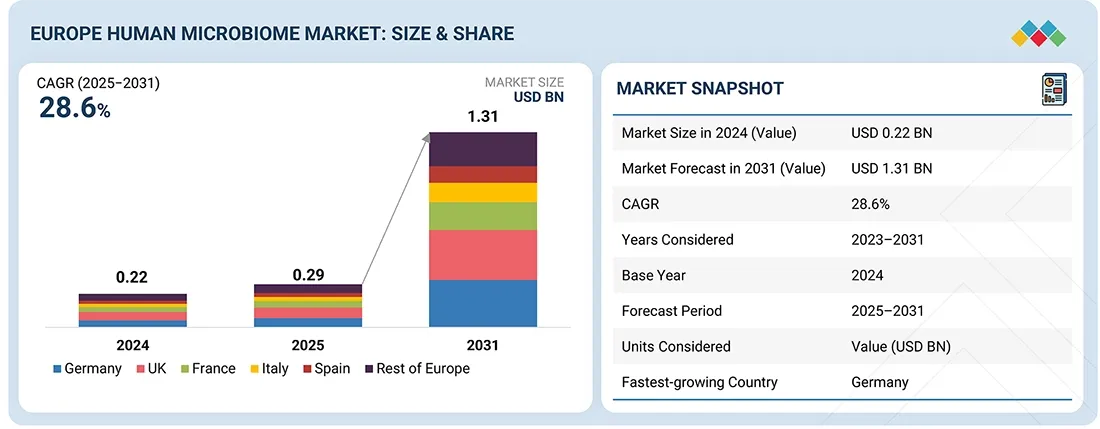
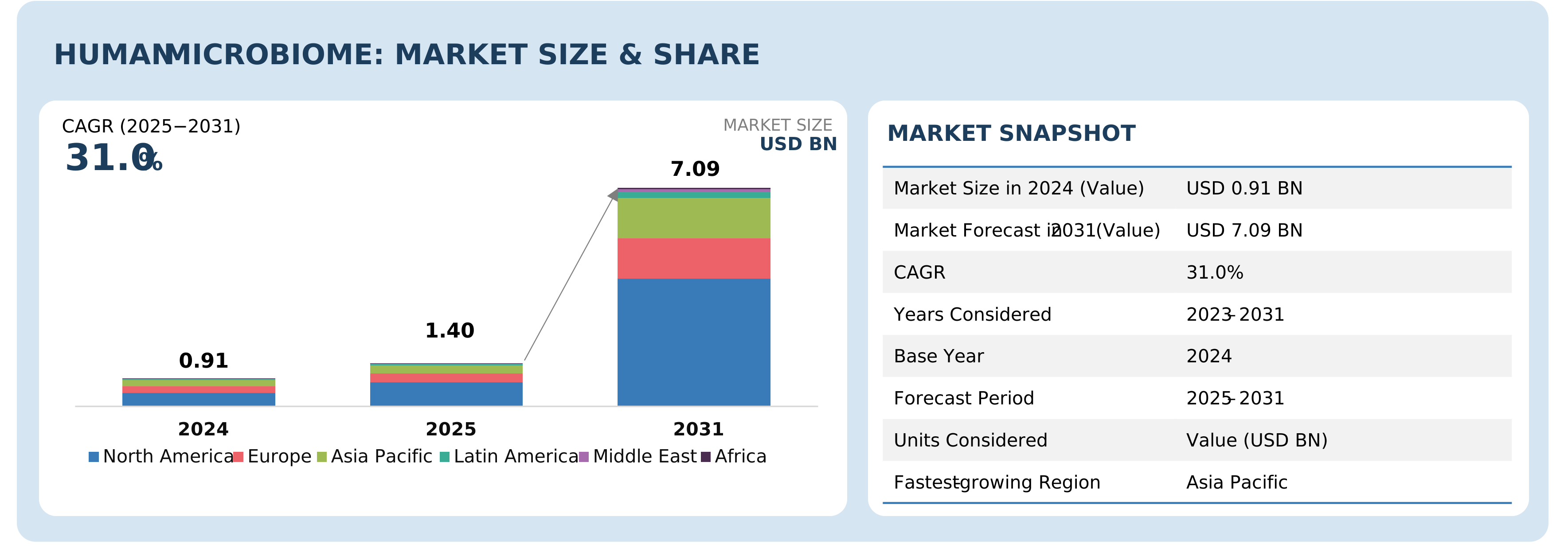
The Europe Human Microbiome Market, valued at US$0.22 billion in 2024, stood at US$0.29 billion in 2025 and is projected to advance at a resilient CAGR of 28.6% from 2025 to 2031, culminating in a forecasted valuation of US$1.31 billion by the end of the period. The growth of the Europe human microbiome market is driven by increased awareness of personalized health, the adoption of microbiome-based therapies, and advancements in sequencing technologies and bioinformatics.
Download PDF Brochure:- https://www.marketsandmarkets.com/pdfdownloadNew.asp?id=66008771
- The UK human microbiome market had a share of 24.9% in 2024.
- The microbiome supplements segment is projected to have the highest CAGR of 29.9% among all product segments.
- By route of administration, the oral administration segment is anticipated to be the most rapidly expanding one from 2025 to 2031, since it has the highest patient acceptance, and is the most suitable for the majority of microbiome-based products, e.g., probiotics, postbiotics, and live biotherapeutics.
- By disease, the gastrointestinal diseases segment had been the leading contributor to the human microbiome market with a 74.2% revenue share in 2024. The increase in the segment is due to many kinds of drugs involved in the clinical trials and human microbiome products, such as probiotics, prebiotics, and synbiotics that target gut microbiota.
- Ferring B.V., OptiBiotix Health PLC, and BioGaia eere the top companies identified in the Europe human microbiome market, according to their market share and product footprint.
- SNIPR BIOME, Mikrobiomik Healthcare Company S.L, and OxThera, among others have identified as the upcoming leaders of the market and the future trends of the industry.
The human microbiome market in Europe is experiencing consistent expansion, which is primarily influenced by factors such as the general awareness of personalized health, the use of microbiome-based therapies, and innovations in sequencing technologies and bioinformatics. Consumers in Europe look for personalized solutions to improve their microbiome makeup; thus, the demand for direct-to-consumer microbiome products providing detailed analysis and personalized recommendations has increased.